Advertisements
Advertisements
And now, if you will set us to our task,
We will serve you four and twenty hours a day!
Rewrite the given lines with the ending ‘365 days a year.'
Concept: undefined >> undefined
Write your favourite stanza from the poem and find the rhyming scheme.
Concept: undefined >> undefined
Advertisements
Read the poem and find the line for the following poetic device or write your own example.
Alliteration.
Concept: undefined >> undefined
Read the poem and find the line for the following poetic device or write your own example.
Assonance.
Concept: undefined >> undefined
Read the poem and find the line for the following poetic device or write your own example.
Personification.
Concept: undefined >> undefined
Read the poem and find the line for the following poetic device or write your own example.
Simile.
Concept: undefined >> undefined
Read the different verb form where they remain the same in the direct and indirect speech in the following case. Fill in the blank with missing indirect speech.
If the reporting verb is in the present tense.
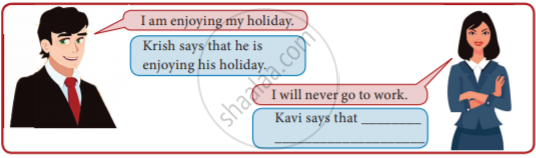
Concept: undefined >> undefined
Read the different verb form where they remain the same in the direct and indirect speech in the following case. Fill in the blank with missing indirect speech.
When we report a universal truth (something that is always true)
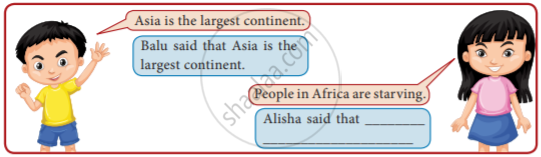
Concept: undefined >> undefined
Read the different verb form where they remain the same in the direct and indirect speech in the following case. Fill in the blank with missing indirect speech.
With modal verbs would, might, could, should, ought to, used to.
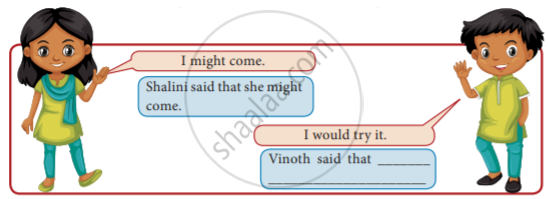
Concept: undefined >> undefined
Read the different verb form where they remain the same in the direct and indirect speech in the following case. Fill in the blank with missing indirect speech.
With would rather, had better,

Concept: undefined >> undefined
Read the different verb form where they remain the same in the direct and indirect speech in the following case. Fill in the blank with missing indirect speech.
In if-clauses and time-clauses.
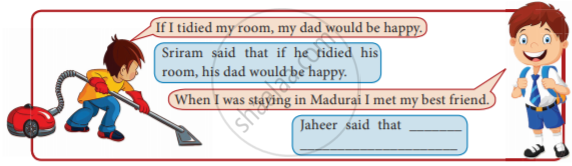
Concept: undefined >> undefined
Read the different verb form where they remain the same in the direct and indirect speech in the following case. Fill in the blank with missing indirect speech.
We do not usually change the modal verbs must and needn’t. But must can become had to or would have to and needn’t can become didn’t have to or wouldn’t have to if we want to express an obligation. Would/wouldn’t have to are used to talk about future obligations.
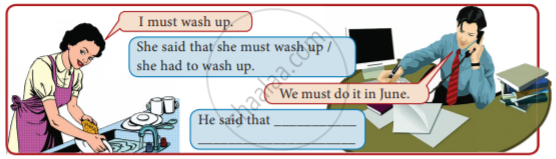
Concept: undefined >> undefined
Why did Francis Bennett wake up with a bad temper?
Concept: undefined >> undefined
What was a mechanized dressing room?
Concept: undefined >> undefined
Why was Bennett curious about astronomy?
Concept: undefined >> undefined
Give three instances of how mechanization has changed life at home in 2889?
Concept: undefined >> undefined
How is advertising in this age different from what we have today?
Concept: undefined >> undefined
