Advertisements
Advertisements
How did ‘Salt March’ become an effective tool of resistance against colonialism? Explain
Concept: undefined >> undefined
Describe the main features of the 'Salt March'.
Concept: undefined >> undefined
Advertisements
What is meant by the idea of satyagraha?
Concept: undefined >> undefined
Compare the images of Bharat Mata with the image of Germania.
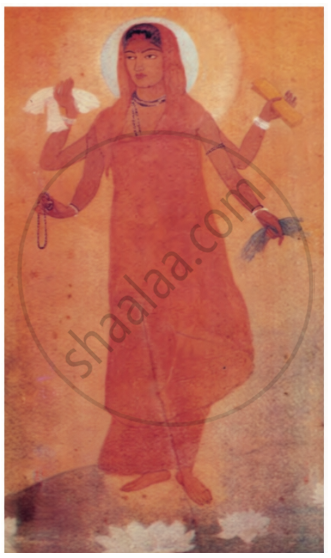
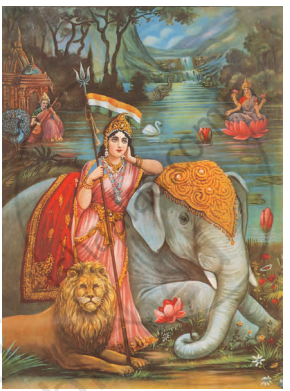
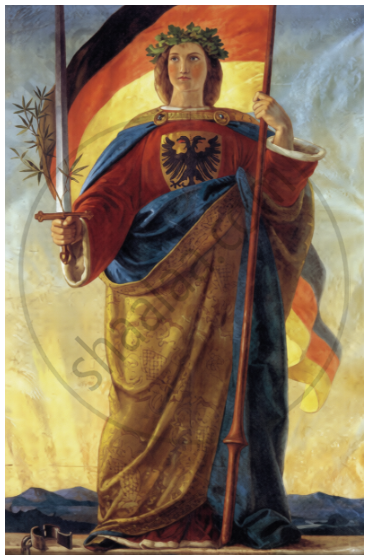
Concept: undefined >> undefined
Discuss the Salt March to make clear why it was an effective symbol of resistance against colonialism.
Concept: undefined >> undefined
What is meant by Satyagraha?
Concept: undefined >> undefined
United Kingdom of Great Britain came into existence in the year - ____________.
Concept: undefined >> undefined
Who founded the revolutionary militia Red Shirt?
Concept: undefined >> undefined
The most celebrated Italian freedom fighter was:
Concept: undefined >> undefined
Which of the following was the result of the Act of Union, 1707?
Concept: undefined >> undefined
Identify the major aspect that helped in the formation of a nation-state in Britain.
Concept: undefined >> undefined
When Britain was pre-occupied with war, industries had developed in ______
Concept: undefined >> undefined
By whom was ‘Sambad Kaumudi’ published in 1821?
Concept: undefined >> undefined
The Deoband Seminary was founded in ____________.
Concept: undefined >> undefined
How did a new 'British nation', formed through the propagation of a dominant English Culture? Explain.
Concept: undefined >> undefined
Read the given source and answer the questions that follow:
|
WHY NEWSPAPERS? ‘Krishnaji Trimbuck Ranade inhabitant of Poona intends to publish a Newspaper in the Marathi Language with a view of affording useful information on every topic of local interest. It will be open for free discussion on subjects of general utility, scientific investigation and the speculations connected with the antiquities, statistics, curiosities, history and geography of the country and of the Deccan especially… the patronage and support of all interested in the diffusion of knowledge and Welfare of the People is earnestly solicited.’ Bombay Telegraph and Courier, 6 January 1849 The task of the native newspapers and political associations is identical to the role of the Opposition in the House of Commons in Parliament in England. That is of critically examining government policy to suggest improvements, by removing those parts that will not be to the benefit of the people, and also by ensuring speedy implementation. These associations ought to carefully study the particular issues, gather diverse relevant information on the nation as well as on what are the possible and desirable improvements, and this will surely earn it considerable influence.’ Native Opinion, 3 April 1870. |
- Explain the main reason of publishing newspaper by Krishnaji?
- How was the task of native newspaper and political association seen identical to the role of opposition?
- Analyze the reasons of popularity of newspapers during 19th century.
Concept: undefined >> undefined
Read the given case and answer the questions that follow:
|
Mahatma Gandhi's thoughts on Satyagraha 'It is said of "passive resistance" that it is the weapon of the weak, but the power which is the subject of this article can be used only by the strong. This power is not passive resistance; indeed it calls for intense activity. The movement in South Africa was not passive but active...' 'Satyagrah is not a physical force. A satyagrah does not inflict pain on the adversary, he does not seek his destruction... In the use of satyagraha, there is no ill-will whatever.' 'Satyagraha is pure soul-force. 'Truth is the very substance of the soul. That's why this force is called satyagraha. The soul is informed with knowledge. In it burns the flame of love ... Non-violence is the supreme dharma.' 'It is certain that India cannot rival Britain or Europe in force of arms. The British worship the war-god and they can all become, bearers of arms. The hundreds of millions in India can never carry arms. They have made the religion of non-violence their own ... ' |
- What type of movement Gandhiji organised in South Africa?
- Why is satyagraha considered as pure soul-force?
- How has Gandhiji described passive resistance?
Concept: undefined >> undefined
Three Features A, B and C are marked on the given political outline map of India. Identify these features with the help of the following information and write their correct names on the lines marked in the map:
A. The place where the Indian National Congress Session was held.
B. The place associated with the Peasant’s Satyagraha.
C. The place related to calling off the Non–Cooperation Movement.

Concept: undefined >> undefined
(29.1) Name the place where the Indian National Congress Session was held in December 1920.
(29.2) Name the place associated with the movement of Indigo Planters.
(29.3) Name the place related to the Satyagraha of peasants in Gujarat
Concept: undefined >> undefined
Write True or False against the statement.
The international market for fine textiles was dominated by India till the eighteenth century.
Concept: undefined >> undefined
