Advertisements
Advertisements
Match the following:
| 1. | Sodium Chloride | a. | CaSO41/2H2O |
| 2. | Calcium sulphate dihydrate | b. | C2H5Oh |
| 3. | Magnesium sulphate hydrate | c. | CaSO4.2H2O |
| 4. | Calcium sulphate hemihydrate | d. | NaCl |
| 5. | Phenol | e. | MgSO4.H2O |
Concept: undefined >> undefined
Analogy:
H2O: Water:: NaCl: ______.
Concept: undefined >> undefined
Advertisements
What is the use of indicator?
Concept: undefined >> undefined
Write some materials prepared by chemical changes.
Concept: undefined >> undefined
______ is a natural indicator.
Concept: undefined >> undefined
Arrange the following statements in correct sequence:
- One side is water-loving and other water-hating molecules.
- When you agitate the cloth, the dirt is surrounded by many molecules and taken away from the cloth.
- The dirt surrounded by the detergent molecules floats in the water making it dirty.
- Finally, the cloth is clean.
- The detergent molecules have two sides.
- Water hating goes and joins with dirt and oil in the cloth while the water-loving joins with the water molecules.
Concept: undefined >> undefined
These are abiotic factors.
- Sunlight
- Bacteria
- Air
- Plants
Concept: undefined >> undefined
From the earliest time ______ have been the staple food of India.
- Rice
- Millet
- Oats
- Pulses
Concept: undefined >> undefined
The wealth of any country largely depends upon its ______.
Concept: undefined >> undefined
Plants, based on their economic values and uses, may be broadly classified into ______ categories.
Concept: undefined >> undefined
Analogy:
Protect from scurvy: Amla:: Bronchitis, expectorant: ______.
Concept: undefined >> undefined
Define – Economic botany.
Concept: undefined >> undefined
Give evidence for the fact that Rice, Wheat, and Millets were cultivated and utilized in the ancient days.
Concept: undefined >> undefined
Classify plants on the basis of economic values and uses.
Concept: undefined >> undefined
What will happen when we place magnets near cell phones, computers, and DVDs?
Concept: undefined >> undefined
The abiotic factors are the non-living parts such as sunlight, air, water, and minerals in the soil.
Concept: undefined >> undefined
Questions based on Higher Order Thinking Skills:
There are three spheres A, B, C as shown below.
Sphere A and B are made of same material. Sphere C is made of a different material. Spheres A and C have equal radii. The radius of sphere B is half that of A. Density of A is double that of C.
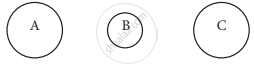
Now answer the following questions.
- Find the ratio of masses of spheres A and B.
- Find the ratio of volumes of spheres A and B.
- Find the ratio of masses of spheres A and C.
Concept: undefined >> undefined
Define the term matter.
Concept: undefined >> undefined
