Advertisements
Advertisements
And what about the red triangle?

Concept: undefined >> undefined
Now you find the area of the two rectangles Sadiq is talking about. What is the area of the red triangle? Explain
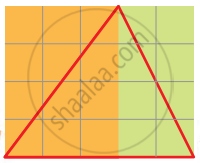
Concept: undefined >> undefined
Advertisements
 |
Oh, I thought of doing it differently! If you draw like this, the area is still 10 square cm. |
Is Suruchi correct? How much is the blue area? Explain
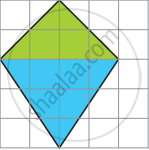
Concept: undefined >> undefined
Here is a rectangle of an area of 20 square cm.
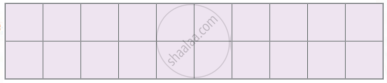
Draw one straight line in this rectangle to divide it into two equal triangles. What is the area of each of the triangles?
Concept: undefined >> undefined
Here is a rectangle of an area of 20 square cm.
Draw two straight lines in this rectangle to divide it into one rectangle and two equal triangles.
What is the area of the rectangle?
What is the area of each of the triangles?
Concept: undefined >> undefined
The steps on which the mouse jumps - ____________
Concept: undefined >> undefined
The steps on which the cat jumps - ____________
Concept: undefined >> undefined
The steps on which both the cat and the mouse jump - ____________
Concept: undefined >> undefined
Can the mouse get away?
Concept: undefined >> undefined
If the cat starts from the 5th step and jumps five steps at a time and the mouse starts from the 8th step and jumps four steps at a time, can the mouse get away?
Concept: undefined >> undefined
Throw two dice together. What are the numbers that turn up on the faces of the dice? Make a two-digit number using them. If it is a multiple of any of the numbers written next to the circles, you can write it in that circle. Then it is your friend’s turn. The one who can write more numbers in 10 rounds is the winner.
Hint: I have 3 and 2 on my dice. If I make 23, it is not the multiple of any of the numbers. So I will make 32, which is a multiple of 4, and write it in the red circle.

Concept: undefined >> undefined
More tamarind seeds
Ammini is arranging 12 tamarind seeds in the form of different rectangles. Try to make more rectangles like this using 12 tamarind seeds. How many different rectangles can you make?
Concept: undefined >> undefined
If there are 15 tamarind seeds how many rectangles can you make?
Concept: undefined >> undefined
Complete the multiplication chart given here.

Look at the green boxes in the chart. These show how we can get 12 by multiplying different numbers.
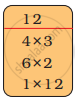
12 = 4 × 3, so 12 is a multiple of both 4 and 3. 12 is also a multiple of 6 and 2, as well as 12 and 1. We say 1, 2, 3, 4, 6, 12 are factors of 12.
Concept: undefined >> undefined
What are the factors of 10?
Can you do this from the chart?
Concept: undefined >> undefined
What are the factors of 36?
Concept: undefined >> undefined
Find out all the factors of 36 from the multiplication chart.
Concept: undefined >> undefined
What is the biggest number for which you can find the factors from this chart?
Concept: undefined >> undefined
What can you do for numbers bigger than that?
Concept: undefined >> undefined
Look at the factor tree. Now you can make another tree like this?
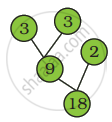
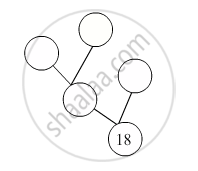
Concept: undefined >> undefined
