हिंदी

Science (English Medium) कक्षा ११ - CBSE Question Bank Solutions for Chemistry

Advertisements
[object Object]
[object Object]
विषयों
मुख्य विषय
अध्याय
Advertisements
Advertisements
Chemistry
< prev  1001 to 1020 of 1673  next > 

Which electron displacement effect explains the following correct orders of acidity of the carboxylic acids?

\[\ce{Cl3CCOOH > Cl2CHCOOH > ClCH2COOH}\]

[8] Organic Chemistry - Some Basic Principles and Techniques
Chapter: [8] Organic Chemistry - Some Basic Principles and Techniques
Concept: undefined >> undefined

The number of atoms present in one mole of an element is equal to Avogadro number. Which of the following element contains the greatest number of atoms?

[1] Some Basic Concepts of Chemistry
Chapter: [1] Some Basic Concepts of Chemistry
Concept: undefined >> undefined

Advertisements

The Balmer series in the hydrogen spectrum corresponds to the transition from n1 = 2 to n2 = 3, 4,.......... This series lies in the visible region. Calculate the wave number of line associated with the transition in Balmer series when the electron moves to n = 4 orbit. (RH = 109677 cm–1)

[2] Structure of Atom
Chapter: [2] Structure of Atom
Concept: undefined >> undefined

Chlorophyll present in green leaves of plants absorbs light at 4.620 × 10¹⁴ Hz. Calculate the wavelength of radiation in nanometer. Which part of the electromagnetic spectrum does it belong to?

[2] Structure of Atom
Chapter: [2] Structure of Atom
Concept: undefined >> undefined

Assertion (A): Black body is an ideal body that emits and absorbs radiations of all frequencies.

Reason (R): The frequency of radiation emitted by a body goes from a lower frequency to higher frequency with an increase in temperature.

[2] Structure of Atom
Chapter: [2] Structure of Atom
Concept: undefined >> undefined

Threshold frequency, ν0 is the minimum frequency which a photon must possess to eject an electron from a metal. It is different for different metals. When a photon of frequency 1.0 × 10¹⁵ s–1 was allowed to hit a metal surface, an electron having 1.988 × 10⁻¹⁹ J of kinetic energy was emitted. Calculate the threshold frequency of this metal. Show that an electron will not be emitted if a photon with a wavelength equal to 600 nm hits the metal surface.

[2] Structure of Atom
Chapter: [2] Structure of Atom
Concept: undefined >> undefined

Those elements impart colour to the flame on heating in it, the atoms of which require low energy for the ionisation (i.e., absorb energy in the visible region of spectrum). The elements of which of the following groups will impart colour to the flame?

(i) 2

(ii) 13

(iii) 1

(iv) 17

[3] Classification of Elements and Periodicity in Properties
Chapter: [3] Classification of Elements and Periodicity in Properties
Concept: undefined >> undefined

Among the elements \[\ce{B, Al, C}\] and \[\ce{Si}\], which element has the highest first ionisation enthalpy? 

[3] Classification of Elements and Periodicity in Properties
Chapter: [3] Classification of Elements and Periodicity in Properties
Concept: undefined >> undefined

Nitrogen has positive electron gain enthalpy whereas oxygen has negative. However, oxygen has lower ionisation enthalpy than nitrogen. Explain.

[3] Classification of Elements and Periodicity in Properties
Chapter: [3] Classification of Elements and Periodicity in Properties
Concept: undefined >> undefined

Arrange the elements \[\ce{N, P, O}\] and \[\ce{S}\] in the order of increasing first ionisation enthalpy. Give reason for the arrangement assigned.

[3] Classification of Elements and Periodicity in Properties
Chapter: [3] Classification of Elements and Periodicity in Properties
Concept: undefined >> undefined

Explain the deviation in ionisation enthalpy of some elements from the general trend by using the given figure.

[3] Classification of Elements and Periodicity in Properties
Chapter: [3] Classification of Elements and Periodicity in Properties
Concept: undefined >> undefined

Explain the following:

Ionisation enthalpy decrease in a group from top to bottom?

[3] Classification of Elements and Periodicity in Properties
Chapter: [3] Classification of Elements and Periodicity in Properties
Concept: undefined >> undefined

Assertion (A): Generally, ionisation enthalpy increases from left to right in a period.

Reason (R): When successive electrons are added to the orbitals in the same principal quantum level, the shielding effect of inner core of electrons does not increase very much to compensate for the increased attraction of the electron to the nucleus.

[3] Classification of Elements and Periodicity in Properties
Chapter: [3] Classification of Elements and Periodicity in Properties
Concept: undefined >> undefined

Define ionisation enthalpy. Discuss the factors affecting ionisation enthalpy of the elements and its trends in the periodic table.

[3] Classification of Elements and Periodicity in Properties
Chapter: [3] Classification of Elements and Periodicity in Properties
Concept: undefined >> undefined

Discuss and compare the trend in ionisation enthalpy of the elements of group1 with those of group17 elements.

[3] Classification of Elements and Periodicity in Properties
Chapter: [3] Classification of Elements and Periodicity in Properties
Concept: undefined >> undefined

Polarity in a molecule and hence the dipole moment depends primarily on electronegativity of the constituent atoms and shape of a molecule. Which of the following has the highest dipole moment?

[4] Chemical Bonding and Molecular Structure
Chapter: [4] Chemical Bonding and Molecular Structure
Concept: undefined >> undefined

Arrange the following bonds in order of increasing ionic character giving reason.

\[\ce{N - H, F - H, C - H}\] and \[\ce{O - H}\]

[4] Chemical Bonding and Molecular Structure
Chapter: [4] Chemical Bonding and Molecular Structure
Concept: undefined >> undefined

18.0 g of water completely vapourises at 100°C and 1 bar pressure and the enthalpy change in the process is 40.79 kJ mol–1. What will be the enthalpy change for vapourising two moles of water under the same conditions? What is the standard enthalphy of vapourisation for water?

[5] Chemical Thermodynamics
Chapter: [5] Chemical Thermodynamics
Concept: undefined >> undefined

The value of ∆fHΘ for \[\ce{NH3}\] is – 91.8 kJ mol–1. Calculate enthalpy change for the following reaction:

\[\ce{2NH3(g) -> N2(g) + 3H2(g)}\]

[5] Chemical Thermodynamics
Chapter: [5] Chemical Thermodynamics
Concept: undefined >> undefined

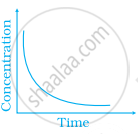
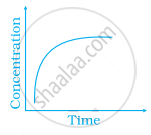
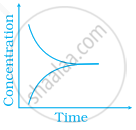
Which of the following options will be correct for the stage of half completion of the reaction A ⇌ B.

[6] Equilibrium
Chapter: [6] Equilibrium
Concept: undefined >> undefined
< prev  1001 to 1020 of 1673  next > 
Advertisements
Advertisements
CBSE Science (English Medium) कक्षा ११ Question Bank Solutions
Question Bank Solutions for CBSE Science (English Medium) कक्षा ११ Biology
Question Bank Solutions for CBSE Science (English Medium) कक्षा ११ Chemistry
Question Bank Solutions for CBSE Science (English Medium) कक्षा ११ Computer Science (C++)
Question Bank Solutions for CBSE Science (English Medium) कक्षा ११ Computer Science (Python)
Question Bank Solutions for CBSE Science (English Medium) कक्षा ११ English Core
Question Bank Solutions for CBSE Science (English Medium) कक्षा ११ English Elective - NCERT
Question Bank Solutions for CBSE Science (English Medium) कक्षा ११ Entrepreneurship
Question Bank Solutions for CBSE Science (English Medium) कक्षा ११ Geography
Question Bank Solutions for CBSE Science (English Medium) कक्षा ११ Hindi (Core)
Question Bank Solutions for CBSE Science (English Medium) कक्षा ११ Hindi (Elective)
Question Bank Solutions for CBSE Science (English Medium) कक्षा ११ History
Question Bank Solutions for CBSE Science (English Medium) कक्षा ११ Mathematics
Question Bank Solutions for CBSE Science (English Medium) कक्षा ११ Physics
Question Bank Solutions for CBSE Science (English Medium) कक्षा ११ Political Science
Question Bank Solutions for CBSE Science (English Medium) कक्षा ११ Psychology
Question Bank Solutions for CBSE Science (English Medium) कक्षा ११ Sanskrit (Core)
Question Bank Solutions for CBSE Science (English Medium) कक्षा ११ Sanskrit (Elective)
Question Bank Solutions for CBSE Science (English Medium) कक्षा ११ Sociology
Share
Notifications

Englishहिंदीमराठी


      Forgot password?
Use app×